


10 min read • 2,235 words
Best Programming Languages to Learn in 2026
As we approach 2026, the landscape of programming languages continues to evolve, making it crucial for aspiring developers and tech enthusiasts to stay informed about the best programming languages to learn in 2026. In this article, we will explore the languages that are not only in high demand but also offer significant advantages in various fields of technology. Understanding these languages can provide you with a competitive edge in the job market and enhance your ability to create innovative solutions.
Python remains a dominant force due to its versatility and ease of learning, making it an excellent choice for beginners and experienced developers alike. JavaScript continues to be essential for web development, evolving with new frameworks that enhance its capabilities. Additionally, Rust is gaining traction for system programming, prized for its performance and safety features. Go is becoming the go-to language for cloud computing and microservices architecture, while Kotlin is rapidly surpassing Java in popularity for Android development. By the end of this article, you will have a clear understanding of which programming languages to focus on to maximize your career potential in the coming years.
Emerging Languages to Watch in 2026
As we look ahead to 2026, several programming languages are emerging as the best programming languages to learn in 2026. These languages not only offer unique features but also cater to the evolving needs of developers and the tech industry. Here are some of the most notable languages to consider:
- Rust: Rust has gained significant traction due to its emphasis on memory safety and performance. It is designed to prevent common programming errors, such as null pointer dereferences and buffer overflows. This makes it an excellent choice for systems programming and applications where performance is critical. Companies like Mozilla and Dropbox are already utilizing Rust for their projects, showcasing its reliability and efficiency.
- Kotlin: Kotlin has become the preferred language for Android development, offering a modern and expressive syntax. Its interoperability with Java allows developers to gradually transition to Kotlin without completely abandoning their existing codebases. With Google’s endorsement, Kotlin is set to remain a dominant force in mobile app development, making it one of the best programming languages to learn in 2026.
- Go: Go, also known as Golang, is designed for simplicity and efficiency. Its concurrency features make it ideal for cloud services and microservices architecture. Companies like Google and Uber leverage Go for its performance and ease of use, making it a valuable skill for developers looking to work in cloud computing.
- Elixir: Elixir is a functional programming language built on the Erlang VM, known for its scalability and fault tolerance. It is particularly well-suited for building distributed systems and real-time applications. With the rise of web applications requiring high availability, Elixir is becoming increasingly relevant.
In conclusion, as technology continues to evolve, learning these emerging languages will position developers favorably in the job market and enhance their ability to create innovative solutions.
Languages for Web Development in 2026
As we look towards 2026, the landscape of web development continues to evolve, but some programming languages remain essential for developers. Among the best programming languages to learn in 2026, JavaScript stands out as the dominant language for front-end development. Its versatility allows developers to create interactive and dynamic web applications that enhance user experience. With frameworks like React, Angular, and Vue.js gaining popularity, JavaScript’s role in web development is more critical than ever.
Another language that has gained traction is TypeScript, a superset of JavaScript. TypeScript introduces static typing, which helps developers catch errors early in the development process. This feature significantly improves code quality and maintainability, making it a preferred choice for larger projects. Many companies are adopting TypeScript to enhance their JavaScript codebases, ensuring that developers are equipped with this knowledge in 2026.
HTML and CSS remain fundamental to web development. HTML provides the structure for web pages, while CSS is responsible for styling and layout. Mastery of these languages is crucial for any web developer, as they form the backbone of all web content. Understanding how to effectively use HTML and CSS will enable developers to create visually appealing and user-friendly websites.
Lastly, PHP continues to be relevant in the web development arena. Despite the emergence of newer technologies, PHP powers a significant portion of the web, particularly in content management systems like WordPress. Learning PHP can open doors to many opportunities, especially for developers interested in back-end development.
- JavaScript: Essential for front-end interactivity.
- TypeScript: Enhances JavaScript with static typing.
- HTML/CSS: The foundation of web page structure and design.
- PHP: A reliable choice for server-side scripting.
In conclusion, mastering these languages will position aspiring developers for success in the ever-changing world of web development in 2026.
Languages for Data Science and AI in 2026
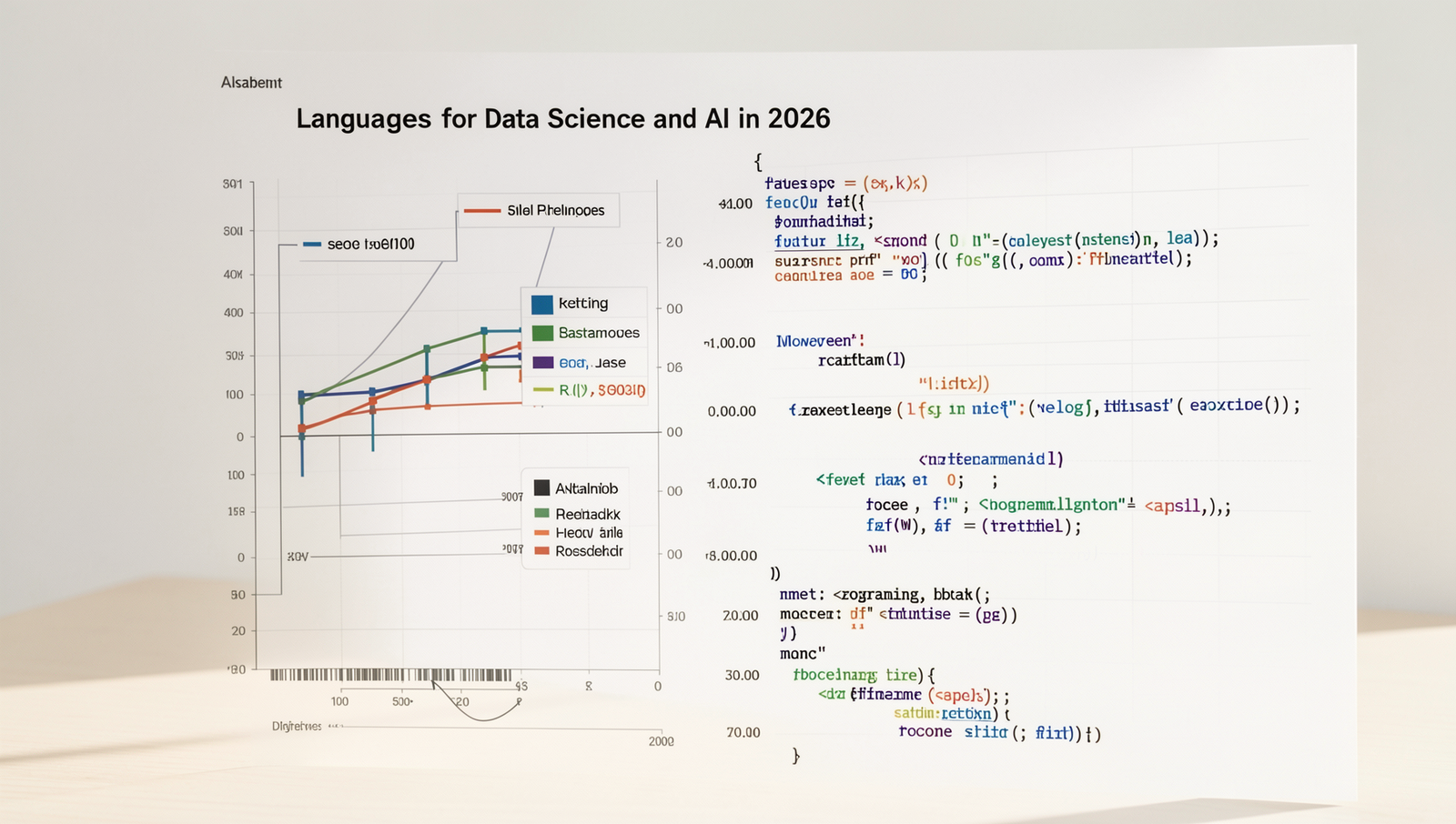
As we look ahead to 2026, the landscape of programming languages continues to evolve, particularly in the fields of data science and artificial intelligence (AI). Among the best programming languages to learn in 2026, several stand out due to their unique capabilities and widespread adoption.
First and foremost, Python remains the leading language for data analysis and machine learning. Its simplicity and readability make it an ideal choice for beginners and experts alike. Python boasts a rich ecosystem of libraries such as pandas for data manipulation, NumPy for numerical computing, and TensorFlow for deep learning. This versatility allows data scientists to perform complex analyses and build sophisticated AI models with ease.
Another significant language is R, which is specialized for statistical computing and graphics. R is particularly favored in academia and research due to its powerful statistical packages and data visualization capabilities. With libraries like ggplot2 for data visualization and caret for machine learning, R provides robust tools for data analysis.
Julia is also gaining traction as a high-performance language for numerical and computational science. Its speed and efficiency make it ideal for tasks that require heavy computations, such as simulations and large-scale data processing. Julia’s syntax is similar to Python, making it accessible for those familiar with other programming languages.
Lastly, MATLAB continues to be widely used, especially in engineering and scientific applications. Its powerful toolboxes and built-in functions allow for complex mathematical modeling and data analysis, making it a staple in many research and development environments.
- Python: Best for machine learning and data analysis.
- R: Ideal for statistical computing and graphics.
- Julia: Excellent for high-performance numerical tasks.
- MATLAB: Preferred for engineering and scientific applications.
In summary, as we approach 2026, mastering these languages will be crucial for anyone looking to excel in data science and AI.
Conclusion
As we look ahead to 2026, the landscape of technology continues to evolve at a rapid pace, making it crucial for aspiring developers to choose the best programming languages to learn in 2026. Languages such as Python, JavaScript, and Rust are not only popular but also versatile, enabling developers to work across various domains, from web development to data science and systems programming. By mastering these languages, learners can enhance their employability and adapt to the changing demands of the tech industry.
In addition to focusing on specific languages, it is essential to cultivate a mindset of continuous learning and adaptability. The tech world is dynamic, and staying updated with emerging trends and tools will provide a competitive edge. Whether you are a beginner or looking to expand your skill set, investing time in learning the best programming languages to learn in 2026 will pay off in the long run. Start by exploring online courses, engaging with coding communities, and building projects that showcase your skills. The journey may be challenging, but the rewards are significant.
Real-World Examples
As we look toward the future, understanding the best programming languages to learn in 2026 becomes crucial for aspiring developers and seasoned professionals alike. The tech landscape is constantly evolving, and practical examples can help illustrate the significance of these languages in real-world applications. Below, we explore how some of the best programming languages are being utilized across various industries, showcasing their relevance and demand.
One of the standout languages for 2026 is Python. Known for its simplicity and versatility, Python is widely used in data science, machine learning, and web development. For instance, companies like Google and Netflix leverage Python for data analysis and backend services. In the realm of machine learning, libraries such as TensorFlow and PyTorch, both built on Python, are essential tools for developers creating predictive models and AI applications. The ability to quickly prototype and iterate makes Python an invaluable asset in these fields.
JavaScript continues to dominate web development, making it one of the best programming languages to learn in 2026. With the rise of frameworks like React and Angular, JavaScript has become the backbone of modern web applications. For example, Facebook uses React to build its user interface, allowing for a dynamic and responsive experience. Furthermore, Node.js, a JavaScript runtime, enables developers to use JavaScript on the server side, streamlining the development process and allowing for full-stack JavaScript applications.
Another language gaining traction is Rust, particularly in systems programming and performance-critical applications. Companies like Mozilla and Dropbox are adopting Rust for its memory safety features and performance efficiency. For instance, Dropbox has rewritten parts of its file storage system in Rust, resulting in improved performance and reduced bugs. This trend highlights Rust’s growing importance in areas where reliability and speed are paramount, making it a compelling choice for developers looking to future-proof their skills.
In the realm of mobile app development, Swift remains a top choice for iOS applications. With Apple continuously enhancing the Swift language, developers are able to create robust and user-friendly applications for the iPhone and iPad. Popular apps like Airbnb and LinkedIn utilize Swift to deliver seamless experiences to their users. The language’s emphasis on safety and performance makes it an attractive option for developers aiming to create high-quality mobile applications.
Furthermore, Kotlin has emerged as a preferred language for Android development. Google officially endorsed Kotlin as a first-class language for Android, leading to its rapid adoption. Companies like Pinterest and Trello have integrated Kotlin into their Android apps, benefiting from its concise syntax and interoperability with Java. As the demand for mobile applications continues to soar, mastering Kotlin will be essential for developers looking to excel in the Android ecosystem.
Lastly, languages like Go (Golang) are making waves in cloud computing and microservices architecture. Companies such as Google and Uber utilize Go for its efficiency and scalability. For example, Uber’s infrastructure relies on Go to handle high volumes of requests with minimal latency. As businesses increasingly shift towards cloud-native solutions, Go’s ability to manage concurrent processes efficiently positions it as a vital language for developers in 2026.
In summary, the best programming languages to learn in 2026 are not only about personal interest but also about market demand and real-world applicability. By understanding how these languages are used in various industries, developers can make informed decisions about their learning paths and career trajectories. Embracing these languages will not only enhance their skill sets but also open doors to exciting opportunities in the tech world.
Common Mistakes and How to Avoid Them
When venturing into the world of programming, especially when considering the best programming languages to learn in 2026, many beginners make common mistakes that can hinder their progress. Understanding these pitfalls and how to avoid them can significantly enhance your learning experience.
One prevalent mistake is choosing a programming language based solely on trends or popularity rather than personal interest or career goals. While languages like Python and JavaScript are in high demand, it’s crucial to consider what projects excite you. For instance, if you’re interested in data science, focusing on Python makes sense. Conversely, if web development intrigues you, JavaScript or TypeScript might be more appropriate.
Another common error is neglecting foundational concepts. Many learners jump straight into coding without fully grasping the underlying principles of programming. This can lead to confusion and frustration later on. To avoid this, take the time to understand basic concepts such as algorithms, data structures, and object-oriented programming. Resources like online courses or coding bootcamps can provide structured learning paths.
Additionally, many learners underestimate the importance of practice. Programming is a skill best learned through hands-on experience. Set aside regular time for coding practice, work on personal projects, or contribute to open-source projects. This not only reinforces your learning but also builds a portfolio that can be beneficial for job applications.
Lastly, don’t hesitate to seek help when needed. Many beginners feel overwhelmed and try to solve problems on their own, which can lead to frustration. Joining online communities, forums, or local coding groups can provide support and guidance. Engaging with others can also expose you to different perspectives and solutions, enriching your learning journey.
By being mindful of these common mistakes and actively working to avoid them, you can set yourself up for success as you explore the best programming languages to learn in 2026.
Frequently Asked Questions
What are the best programming languages to learn in 2026?
In 2026, the best programming languages to learn include Python, JavaScript, Go, and Rust. Python remains popular for its versatility in data science and machine