

10 min read • 2,230 words
Docker vs Virtual Machines: What Is the Difference?
In the ever-evolving landscape of software development and deployment, understanding the differences between Docker and virtual machines (VMs) is crucial for making informed decisions. Both technologies serve the purpose of isolating applications, but they do so in fundamentally different ways. This article will explore the key distinctions between Docker containers and virtual machines, highlighting their respective advantages and use cases. By the end, readers will have a clearer understanding of when to use Docker vs virtual machines in their projects.
Docker containers share the host operating system’s kernel, making them lightweight and significantly faster to start compared to virtual machines, which run their own operating systems. This difference in architecture allows Docker to excel in microservices environments, where rapid deployment and scalability are essential. On the other hand, virtual machines provide stronger isolation by emulating entire hardware systems, making them suitable for running legacy applications that require a complete OS environment. Additionally, Docker containers can be easily moved across different environments, offering flexibility that VMs may lack. Understanding these differences is vital for optimizing your development and deployment strategies.
Architecture Differences
When comparing Docker vs Virtual Machines (VMs), one of the most significant distinctions lies in their architecture. Docker utilizes a layered file system, which allows for efficient storage and management of images. Each layer in a Docker image represents a set of file changes, enabling developers to reuse layers across different images. This not only conserves disk space but also speeds up the build process. For instance, if two applications share a common base image, Docker can utilize the same layers without duplicating them, leading to faster deployment times.
In contrast, Virtual Machines operate on hypervisors, which create and manage multiple virtual environments on a single physical server. Each VM runs a full operating system, including its own kernel, which results in significant overhead. This means that while VMs provide strong isolation and security, they also consume more resources compared to Docker containers. For example, running multiple VMs on a server may lead to increased CPU and memory usage, while Docker containers share the host OS kernel, making them lightweight and more efficient.
Resource allocation is another critical difference in the Docker vs Virtual Machines debate. Docker containers can start almost instantly and use resources more efficiently, as they only require the necessary libraries and binaries to run the application. In contrast, VMs need to allocate a fixed amount of resources at startup, which can lead to underutilization. For example, if a VM is allocated 4GB of RAM but only uses 1GB, the remaining memory is wasted.
Finally, the isolation levels differ significantly between Docker containers and VMs. While VMs provide strong isolation by running separate operating systems, Docker containers share the host OS, which can lead to potential security concerns. However, Docker’s lightweight nature allows for rapid scaling and deployment, making it ideal for microservices architecture. In summary, understanding these architectural differences is crucial when deciding between Docker vs Virtual Machines for your projects.
Performance and Resource Efficiency
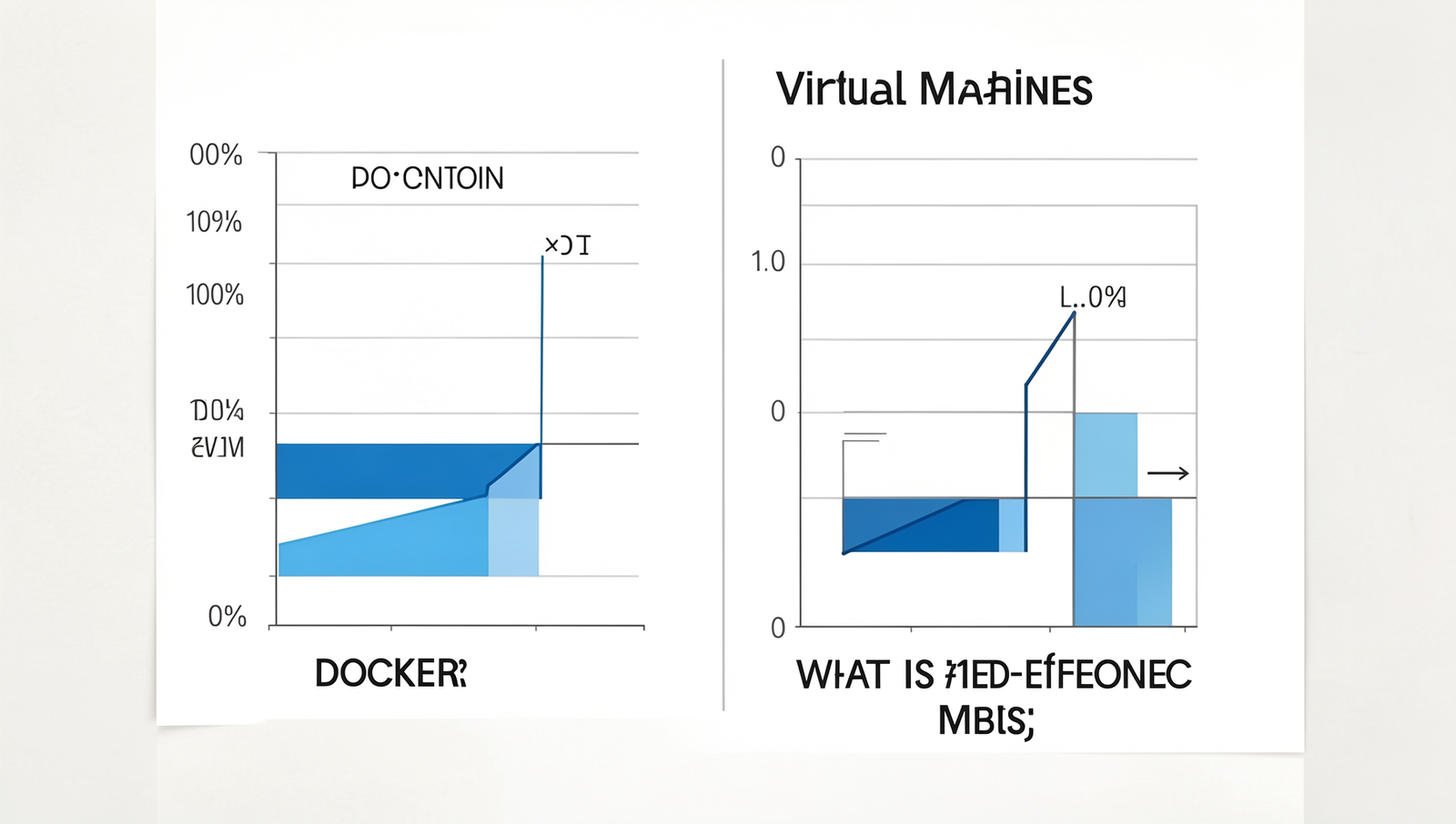
When comparing Docker vs virtual machines, one of the most significant factors to consider is performance and resource efficiency. Docker containers operate by sharing the host operating system’s kernel, which allows them to be lightweight and fast. This shared architecture means that multiple containers can run simultaneously without the need for additional operating system overhead, leading to more efficient resource utilization.
In contrast, virtual machines (VMs) require a complete operating system for each instance. This means that each VM runs its own kernel, which consumes more memory and processing power. For example, if you were to run five VMs on a single host, each VM would need its own OS, leading to considerable resource overhead. This can be particularly problematic in environments where resources are limited or when scaling applications rapidly.
Another critical aspect is the startup time. Docker containers can start in seconds, making them ideal for applications that require quick scaling or deployment. For instance, a web application can spin up multiple container instances in a matter of seconds to handle increased traffic. On the other hand, VMs can take several minutes to boot up, as they need to load the entire operating system before becoming operational.
- Startup Time: Docker containers typically start in seconds, while VMs may take minutes.
- Resource Overhead: VMs consume more resources due to the need for a full OS, whereas Docker containers are lightweight.
- Scalability: Docker allows for rapid scaling of applications, making it suitable for dynamic workloads.
In summary, when evaluating Docker vs virtual machines, Docker’s performance and resource efficiency often make it the preferred choice for modern application deployment, especially in cloud environments where scalability and speed are crucial.
Use Cases and Scenarios
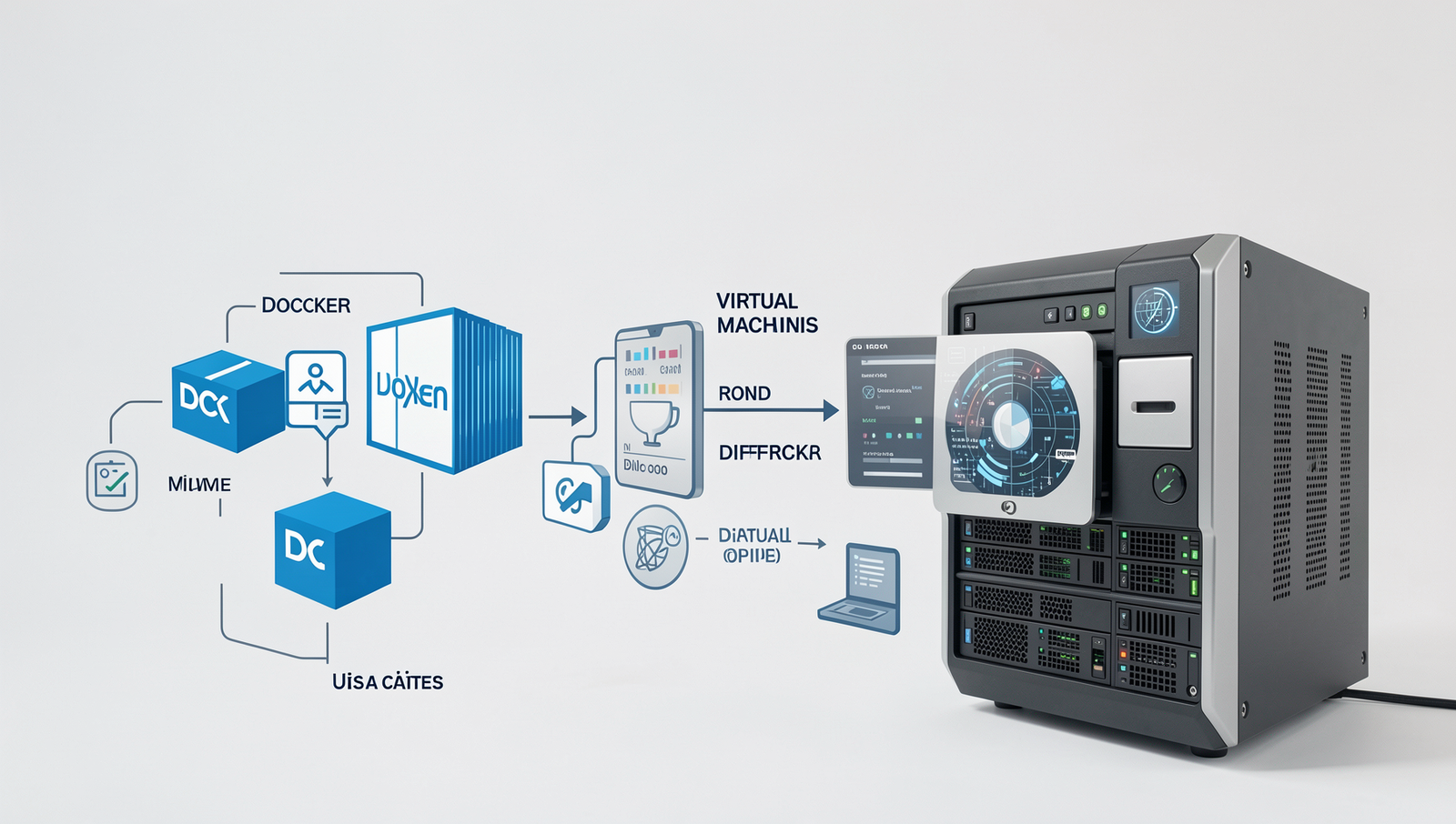
When considering the differences between Docker and virtual machines, it’s essential to understand the best scenarios for using each technology. Docker excels in environments where speed, scalability, and resource efficiency are critical. For instance, organizations adopting microservices architecture benefit significantly from Docker’s lightweight containers. These containers allow developers to deploy applications quickly and efficiently, enabling continuous integration and continuous deployment (CI/CD) practices. With Docker, teams can easily manage dependencies and ensure that applications run consistently across various environments.
Some ideal use cases for Docker include:
- Microservices architecture, where applications are broken down into smaller, manageable services.
- Development and testing environments that require rapid iteration and deployment.
- Cloud-native applications that need to scale dynamically based on demand.
- Environment consistency across different stages of development, testing, and production.
On the other hand, virtual machines are better suited for scenarios where complete isolation and compatibility with legacy systems are necessary. Virtual machines provide a full operating system environment, making them ideal for running legacy applications that may not be compatible with modern containerization technologies. Organizations with existing infrastructure that relies on traditional applications can leverage virtual machines to maintain operational continuity while gradually transitioning to more modern solutions.
Some scenarios where virtual machines are preferred include:
- Running legacy applications that require specific operating system versions.
- Isolated environments for security-sensitive applications.
- Testing different operating systems without affecting the host system.
- Resource-intensive applications that need dedicated resources.
In summary, the choice between Docker vs virtual machines largely depends on the specific needs of the organization. While Docker offers agility and efficiency for modern applications, virtual machines provide the robustness required for legacy systems.
Security Considerations
When comparing Docker vs virtual machines, one of the most critical aspects to consider is their security models. Virtual machines (VMs) operate on a hypervisor that provides strong isolation between different environments. Each VM runs its own operating system, which means that if one VM is compromised, the others remain unaffected due to this robust separation. In contrast, Docker containers share the host OS kernel, which can lead to potential vulnerabilities. If a malicious actor gains access to the kernel, they may compromise all containers running on that host.
Docker containers offer some isolation features, such as namespaces and control groups (cgroups). Namespaces provide a layer of isolation for processes, file systems, and network interfaces, while cgroups limit the resources that containers can use. However, these features do not provide the same level of security as the hypervisor in VMs. This difference is crucial when considering the security of applications deployed in a Docker environment.
Despite the advantages of containerization, there are potential vulnerabilities associated with it. Some common vulnerabilities include:
- Kernel exploits that can affect all containers on a host.
- Misconfigured container settings that expose sensitive data.
- Insecure images that may contain malware or backdoors.
To mitigate these risks, it is essential to follow best practices for securing both Docker and VMs. Some recommended practices include:
- Regularly updating Docker and VM software to patch vulnerabilities.
- Using trusted images from reputable sources.
- Implementing network segmentation to limit container communication.
- Employing security tools like Docker Bench for Security to audit configurations.
By understanding the security considerations in the docker vs virtual machines debate, organizations can make informed decisions about their deployment strategies and ensure a more secure infrastructure.

Conclusion and Future Trends
In the debate of Docker vs virtual machines, it is essential to summarize the key differences that set them apart. Docker containers are lightweight, sharing the host OS kernel, which allows for faster startup times and efficient resource utilization. In contrast, virtual machines run a full operating system, which consumes more resources and requires longer boot times. This fundamental difference makes Docker an excellent choice for microservices architectures and applications requiring rapid scaling, while virtual machines are better suited for running multiple different operating systems or legacy applications that require full isolation.
Looking ahead, the future of containerization and virtualization is promising. As organizations increasingly adopt cloud-native architectures, the demand for containerization technologies like Docker is expected to rise. This trend is further supported by the growing popularity of Kubernetes, a container orchestration platform that simplifies the management of containerized applications. On the other hand, virtualization technologies will continue to evolve, integrating with cloud services to provide hybrid solutions that combine the benefits of both worlds.
Emerging technologies in the field include serverless computing and microservices, which complement containerization by allowing developers to focus on writing code without worrying about infrastructure management. Additionally, advancements in AI and machine learning are paving the way for smarter resource allocation and optimization in both Docker and virtual machine environments.
-
Docker is ideal for rapid development and deployment. - Virtual machines offer robust isolation for diverse applications.
- Hybrid solutions are becoming more common, leveraging both technologies.
In conclusion, the choice between Docker and virtual machines largely depends on the specific needs of your projects. If you require speed and efficiency, Docker is the way to go. However, for applications that need full OS environments or legacy support, virtual machines remain a solid option. Understanding the strengths and weaknesses of each will help you make an informed decision that aligns with your operational goals.
Real-World Examples
Understanding the differences between Docker and virtual machines (VMs) can be greatly enhanced by examining real-world use cases. These examples illustrate how organizations leverage these technologies to meet their specific needs, highlighting the advantages and disadvantages of each approach.
One prominent example is the use of Docker in microservices architecture. Companies like Spotify and Netflix have adopted Docker to manage their microservices efficiently. By using Docker containers, these organizations can deploy individual services independently, allowing for rapid scaling and updates without affecting the entire application. For instance, if Spotify wants to update its recommendation algorithm, it can do so by deploying a new version of that specific microservice in a container, while the rest of the application remains unaffected.
On the other hand, traditional enterprises often rely on virtual machines for their legacy applications. For example, a financial institution may have a critical banking application that requires a specific operating system and configuration. By using VMs, they can create isolated environments that replicate the exact conditions needed for the application to run smoothly. This isolation also enhances security, as each VM operates independently, reducing the risk of vulnerabilities spreading between applications.
- Docker Use Case: A startup developing a web application can use Docker to streamline its development process. Developers can work on different features in isolated containers, ensuring that dependencies do not conflict.
- VM Use Case: A healthcare provider might use VMs to run various applications that handle sensitive patient data, ensuring compliance with regulations by keeping these applications in separate, secure environments.
In summary, while Docker excels in scenarios requiring agility and scalability, virtual machines provide robust solutions for legacy systems and applications needing strict isolation. The choice between Docker vs virtual machines ultimately depends on the specific requirements and constraints of the project at hand.
Frequently Asked Questions
What is the main difference between Docker and virtual machines?
The main difference between Docker and virtual machines lies in their architecture. Docker containers share the host operating system’s kernel, making them lightweight and faster to start. In contrast, virtual machines run a full operating system on virtualized hardware, which requires more resources and time to boot up, leading to increased overhead.
Are Docker containers faster than virtual machines?
Yes, Docker containers are generally faster than virtual machines. Since containers share the host OS and do not require a full OS instance, they can start and stop almost instantly. This speed advantage makes Docker ideal for development and deployment scenarios where rapid scalability and efficiency are crucial.
Can Docker run on a virtual machine?
Yes, Docker can run on a virtual machine. In fact, many users deploy Docker within virtual machines to take advantage of the isolation and resource management that VMs provide. This setup allows developers to create a consistent environment for applications while leveraging the benefits of both technologies.
Which is more suitable for microservices, Docker or virtual machines?
Docker is generally more suitable for microservices due to its lightweight nature and rapid deployment capabilities. Containers allow developers to package applications and their dependencies together, facilitating easier scaling and management of microservices. Virtual machines, while effective, introduce more overhead, making them less ideal for microservices architecture.