

10 min read • 2,217 words
Best AI Coding Tools for Developers in 2026
As we step into 2026, the landscape of software development is undergoing a remarkable transformation, driven by the emergence of advanced AI coding tools. These tools are not just a trend; they represent a significant shift in how developers approach coding tasks. The integration of AI into Integrated Development Environments (IDEs) is set to revolutionize the coding experience by providing real-time code suggestions and error detection, ultimately reducing development time by automating repetitive tasks. This article will explore the best AI coding tools for developers in 2026, highlighting their features and benefits.
Readers will learn about the capabilities of AI-powered debugging tools that enhance code quality by predicting potential bugs before runtime. Additionally, the use of natural language processing allows developers to write code using plain English commands, making programming more accessible. Collaborative AI tools will also be discussed, showcasing how they enable teams to work together efficiently, regardless of their physical locations. Stay ahead of the curve and discover how these tools can elevate your development process.
Top AI-Powered Code Assistants
As we move into 2026, the landscape of software development is rapidly evolving, with AI coding tools becoming indispensable for developers. These tools not only enhance productivity but also improve code quality, making them some of the best AI coding tools for developers in 2026. AI code assistants leverage machine learning algorithms to provide real-time suggestions, automate repetitive tasks, and even debug code.
When selecting an AI code assistant, there are several key features to consider:
- Code Completion: Look for tools that offer intelligent code completion, which predicts and suggests code snippets based on context.
- Error Detection: Effective tools should identify and highlight errors or potential bugs before they become problematic.
- Integration: Ensure compatibility with popular IDEs and version control systems to streamline your workflow.
- Learning Capabilities: The best tools adapt to your coding style over time, providing increasingly relevant suggestions.
Popular AI coding tools in 2026 include GitHub Copilot, Tabnine, and Codeium. Each of these tools has unique strengths:
- GitHub Copilot: Known for its extensive training on public code repositories, it excels in generating context-aware code snippets.
- Tabnine: Offers a wide range of language support and is highly customizable to fit individual developer needs.
- Codeium: Focuses on collaboration features, allowing teams to work together more effectively on projects.
User testimonials highlight the transformative impact of these tools. Developers report significant time savings and increased focus on creative problem-solving rather than mundane coding tasks. Many have noted that AI assistants have become essential partners in their development process, enhancing both speed and accuracy.
Automated Code Review Tools
Code reviews are a critical component of the software development process, ensuring that code quality is maintained and that best practices are followed. They help in identifying bugs, improving code readability, and fostering knowledge sharing among team members. However, traditional code review processes can be time-consuming and prone to human error. This is where AI-enhanced automated code review tools come into play, significantly improving the efficiency and effectiveness of code reviews.
AI enhances code review processes by leveraging machine learning algorithms to analyze code patterns, detect potential issues, and suggest improvements. These tools can quickly scan large codebases, providing developers with immediate feedback and allowing them to address issues before they escalate. This not only saves time but also helps maintain high standards of code quality.
Some of the popular automated review tools in 2026 include:
- DeepCode: Utilizes AI to provide real-time code analysis and suggestions based on best practices.
- SonarQube: Offers comprehensive code quality checks and integrates seamlessly with CI/CD pipelines.
- CodeGuru: Amazon’s tool that uses machine learning to identify critical issues and suggest code improvements.
Case studies have shown significant improvements in code quality through the use of these automated tools. For instance, a leading tech company reported a 40% reduction in bugs after implementing DeepCode, while another organization using SonarQube noted a 30% increase in code maintainability scores. These examples highlight the transformative impact of AI coding tools on the development landscape, making them essential for developers in 2026.

AI-Driven Debugging Solutions
Debugging is one of the most challenging aspects of software development. Developers often spend significant amounts of time identifying and fixing bugs, which can lead to delays in project timelines and increased frustration. Traditional debugging methods can be time-consuming and may not always yield the desired results. This is where AI-driven debugging solutions come into play, revolutionizing the way developers approach bug identification and resolution.
AI technologies can analyze code patterns and detect anomalies much faster than human developers. By leveraging machine learning algorithms, these tools can identify potential bugs before they escalate into larger issues. For instance, AI can analyze historical data to predict where bugs are likely to occur based on past trends, allowing developers to proactively address vulnerabilities.
Some of the leading AI-driven debugging tools in 2026 include:
- DeepCode: This tool uses AI to provide real-time code reviews and suggestions, helping developers catch bugs early in the development process.
- Snyk: Known for its security capabilities, Snyk also employs AI to identify vulnerabilities in code and suggest fixes.
- CodeGuru: Amazon’s CodeGuru uses machine learning to provide recommendations for improving code quality and performance, effectively reducing debugging time.
User feedback on these tools has been overwhelmingly positive. Developers report significant time savings and improved code quality. For example, a software team using DeepCode noted a 30% reduction in debugging time, allowing them to focus more on feature development rather than troubleshooting. Success stories like these highlight the transformative impact of AI on the debugging process, making these tools some of the best AI coding tools for developers in 2026.
Intelligent Code Generation Tools
Code generation refers to the automated process of converting high-level programming language instructions into machine code or other programming languages. This process can significantly streamline software development, allowing developers to focus on higher-level design and functionality rather than the intricacies of coding syntax. In 2026, the landscape of code generation is being transformed by artificial intelligence, leading to the emergence of several innovative tools that enhance productivity and efficiency.
The benefits of using AI for code generation are manifold. Firstly, it accelerates the development process by automating repetitive tasks, which reduces the likelihood of human error. Secondly, AI tools can analyze vast amounts of code to suggest optimizations, ensuring that the generated code is not only functional but also efficient. Additionally, these tools often come equipped with learning capabilities, meaning they can adapt to a developer’s coding style over time, further enhancing their utility.
- GitHub Copilot: This tool leverages OpenAI’s Codex to provide real-time code suggestions directly in the IDE, making it easier for developers to write code quickly.
- Tabnine: An AI-powered code completion tool that learns from your codebase and provides context-aware suggestions to improve coding speed.
- Codeium: A newer entrant that focuses on multi-language support and offers a collaborative coding experience, making it ideal for teams.
Looking ahead, the future of code generation will likely see even more sophisticated AI tools capable of understanding complex requirements and generating entire applications from simple prompts. As these technologies evolve, developers can expect to see enhanced collaboration features, improved integration with existing workflows, and a greater emphasis on security and code quality. The best AI coding tools for developers in 2026 will undoubtedly revolutionize how software is developed, making it more accessible and efficient than ever before.
Integration of AI Tools in Development Environments
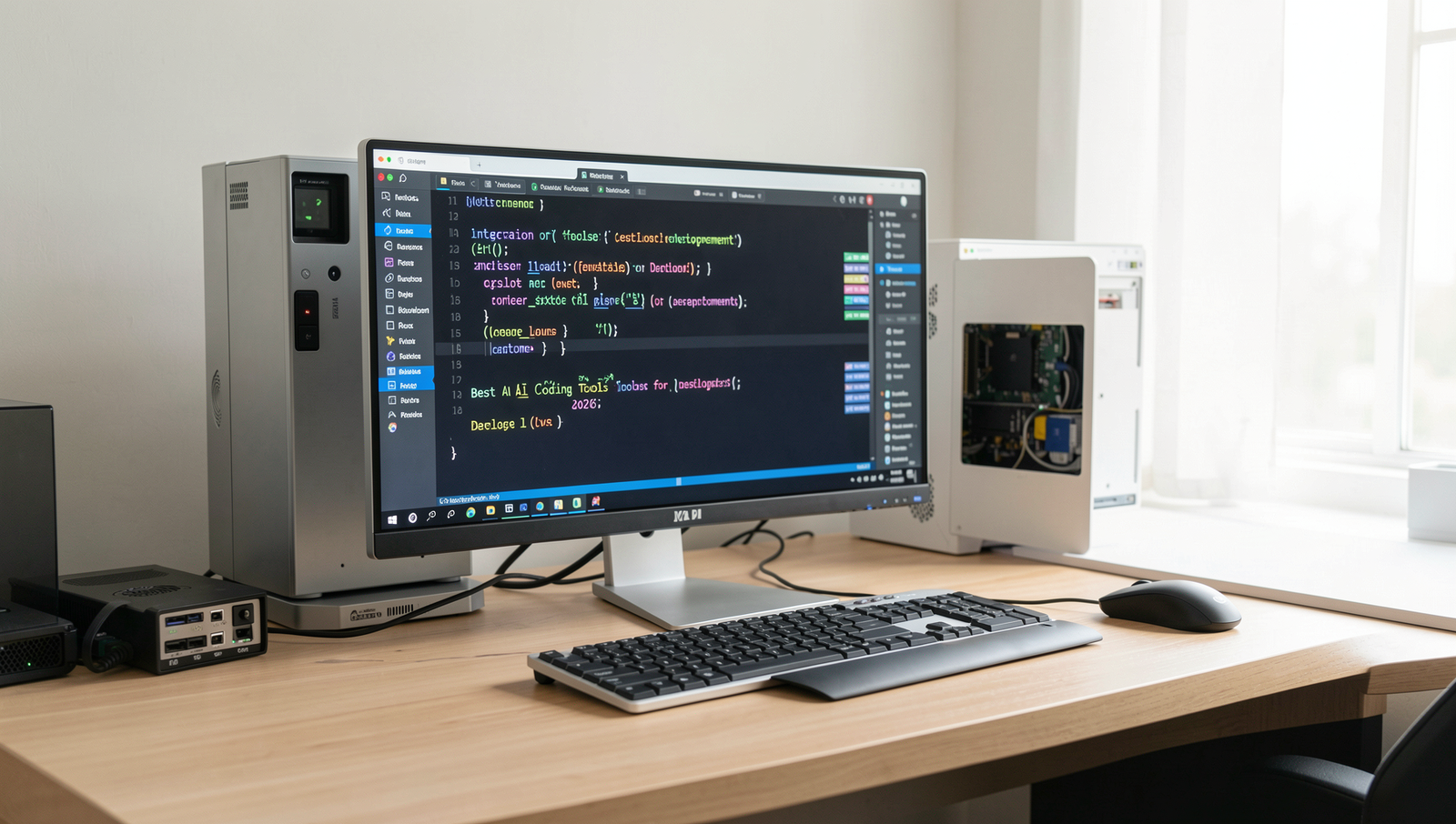
As we look towards 2026, the integration of AI tools in development environments has become increasingly vital for developers aiming to enhance productivity and streamline workflows. Seamless integration allows developers to leverage AI capabilities without disrupting their existing processes, making it easier to adopt new technologies and methodologies.
Several popular Integrated Development Environments (IDEs) have begun to incorporate AI features, transforming the way developers write and debug code. Some of the most notable IDEs with AI capabilities include:
- Visual Studio Code: With extensions like GitHub Copilot, developers can receive code suggestions and auto-completions that adapt to their coding style.
- JetBrains IDEs: Tools like IntelliJ IDEA and PyCharm utilize AI-driven features for code analysis and refactoring, enhancing code quality.
- Eclipse: The integration of AI plugins allows for smarter code recommendations and error detection, improving overall efficiency.
Customization options are also crucial for developers. Many AI tools offer settings that allow users to tailor the AI’s behavior to match their specific coding practices. For instance, developers can adjust the level of assistance provided by AI tools, ensuring that they receive the right amount of support without feeling overwhelmed.
Real-world integration scenarios highlight the effectiveness of AI tools in development environments. For example, a software team working on a large-scale application can utilize AI-driven code reviews to identify potential bugs before deployment, significantly reducing the time spent on manual testing. Additionally, AI can assist in generating documentation based on code changes, keeping project documentation up-to-date effortlessly.
In conclusion, the integration of AI tools in development environments is set to revolutionize the coding landscape by 2026, making it essential for developers to embrace these advancements to remain competitive.
Ethical Considerations and Best Practices
As the landscape of software development continues to evolve with the introduction of advanced AI coding tools, understanding AI ethics becomes paramount for developers. The integration of AI in coding practices raises significant ethical questions, particularly regarding bias, accountability, and transparency. Developers must be aware of these issues to ensure that their applications are not only efficient but also fair and responsible.
To use AI tools responsibly, developers should adhere to several best practices:
- Transparency: Clearly document how AI tools are used in the development process. This includes detailing the data sources and algorithms involved.
- Bias Mitigation: Regularly audit AI-generated outputs for biases. Implement strategies to minimize bias in training data and algorithms.
- User Privacy: Prioritize user data protection by adhering to privacy regulations and ethical standards.
- Continuous Learning: Stay informed about the latest developments in AI ethics and incorporate new findings into coding practices.
Despite the potential benefits, there are risks associated with AI coding tools, such as over-reliance on automation and the potential for job displacement. To mitigate these risks, developers should maintain a balance between AI assistance and human oversight. This ensures that critical thinking and creativity remain integral to the development process.
Looking to the future, the ethical landscape of AI in development will likely become more structured, with increased regulatory frameworks and guidelines. As the Best AI Coding Tools for Developers 2026 emerge, a strong emphasis on ethical considerations will be essential to foster trust and accountability in AI-driven solutions.
Conclusion
As we look ahead to 2026, the landscape of software development is poised to be transformed by the Best AI Coding Tools for Developers. These tools not only enhance productivity but also empower developers to focus on more complex and creative aspects of coding. By automating repetitive tasks and providing intelligent code suggestions, these AI-driven solutions are set to streamline workflows and reduce the time spent on debugging and testing. Developers can leverage these advancements to improve code quality and accelerate project timelines, ultimately leading to more innovative applications.
To stay competitive in this evolving environment, developers should actively explore and adopt the Best AI Coding Tools for Developers 2026. Embracing these technologies will not only enhance individual skill sets but also foster collaboration within teams. As AI continues to evolve, keeping abreast of the latest tools and techniques will be crucial for success. By integrating these tools into daily practices, developers can ensure they are well-equipped to tackle the challenges of tomorrow’s software development landscape.
Frequently Asked Questions
What are the top AI coding tools for developers in 2026?
In 2026, some of the top AI coding tools for developers include GitHub Copilot, Tabnine, and Codeium. These tools leverage advanced machine learning algorithms to assist with code completion, debugging, and even generating entire code snippets, making them invaluable for both individual developers and teams.
How do AI coding tools improve developer productivity?
AI coding tools enhance developer productivity by automating repetitive tasks, suggesting code snippets, and identifying bugs early in the development process. This allows developers to focus on more complex problems and creative solutions, ultimately speeding up the coding process and reducing the time spent on debugging.
Are AI coding tools suitable for beginners?
Yes, AI coding tools are particularly beneficial for beginners. They provide instant feedback and suggestions, which can help new developers learn coding practices and syntax more effectively. Additionally, these tools can assist in understanding complex concepts by providing examples and explanations as users write code.
What programming languages are supported by AI coding tools in 2026?
In 2026, AI coding tools support a wide range of programming languages, including Python, JavaScript, Java, C++, and Ruby. Many tools are designed to be versatile, adapting to various languages and frameworks, thus catering to the diverse needs of developers across different projects and industries.